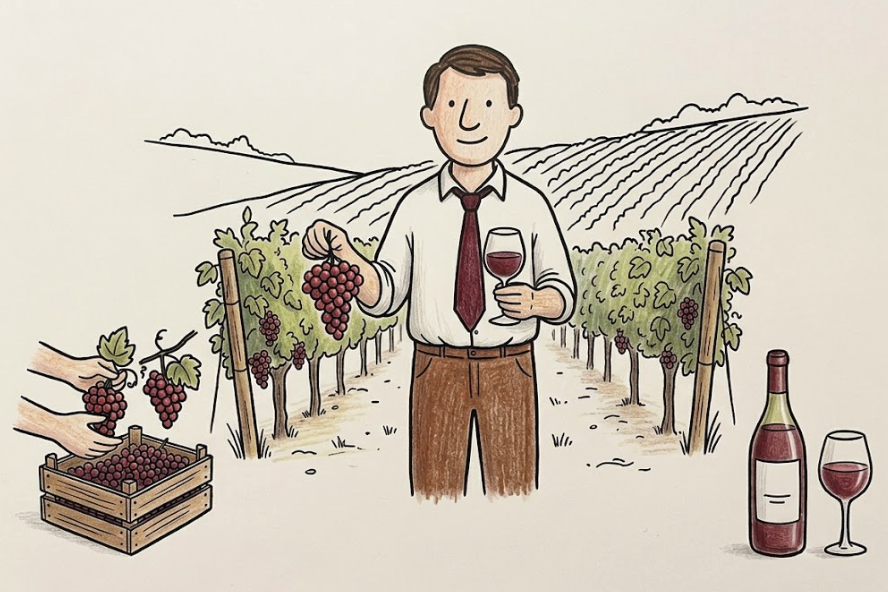
Stories · Natural wine
What is natural wine? How it differs from organic, how it tastes, and how to choose
Natural wine brings healthy grapes and a place to the glass with as little added intervention as possible. It is not the same as an organic label or a no-sulfite claim. How you buy and store it decides whether the bottle arrives intact.
What this article covers
- What is natural wine, and is it the same as organic or no-sulfite wine?
- Which cellar habits matter (yeast, additions, filtration)?
- What should you check for storage and buying to avoid a miss?
- How should you think about temperature and change in the glass after opening?
What natural wine is
Natural wine is wine made from healthy grapes grown without synthetic pesticides or fertilizers, then fermented with as few additives and technical interventions as possible.
Natural wine, French vin nature, and the casual Japanese “nature” all point to that idea.
Terroir here means the soil, climate, and place that shape the grapes. Less cellar makeup leaves more of that place in the glass.
In the 1970s and 1980s, Jules Chauvet and Marcel Lapierre in Beaujolais pushed back against cultured yeast and heavy sulfite. That resistance is the root of today’s movement.
Organic, biodynamic, and no-sulfite: what each covers
On the shelf, organic, bio, natural, and no added sulfite do not mean the same thing.
Organic is a growing standard: no synthetic pesticides, herbicides, or fertilizers. Marks include the EU leaf and Japan’s organic JAS. Cultured yeast, approved cellar additions, and sulfite within a legal cap may still be allowed.
Biodynamic farming follows Rudolf Steiner’s 1924 calendar and preparations. Demeter and Biodyvin are common certifications, with stricter sulfite caps.
“No added sulfite” only says sulfite was not added by hand. Grapes may still be conventional, and the wine may still be fined and filtered like an industrial product.
Natural wine asks for an organic or biodynamic-leaning vineyard and a light hand in the cellar. France’s Vin Méthode Nature is one public frame. Many small estates work this way without a logo.
Three cellar habits that set it apart
Conventional winemaking often steers toward a repeatable taste. Natural wine trusts the fruit and keeps the hand light.
First, wild yeast: the yeasts on skins and in the cellar. Most wines use a cultured strain for speed and aroma control. Wild fermentation is slower because several species take turns, so aroma and savor are less uniform.
Second, almost no additions. Chaptalization, acid adjustment, enzymes, and tannin powder may be legal. These growers skip them when the fruit is already sound.
Third, little fining or filtration. Fining settles haze; filtration pushes wine through a filter. Fine filters also strip flavor, so many bottles wait for gravity and go unfiltered or only roughly settled. Sediment is leftover extract, not a fault.
Why sulfite is almost never absolute zero
Sulfite (sulfur dioxide) slows oxidation and spoilage bacteria. Fermentation itself also makes a trace, often cited around 5 to 15 mg/L.
A bottle with nothing added by hand is called sans soufre in French. A lab can still find a trace.
Some growers add a tiny dose just before bottling so the wine survives a long trip. Vin Méthode Nature marks either none added or no more than 30 mg/L total at bottling. Zero added is not the only honest choice. Sound delivery of the place comes first.
How it tastes, and the hangover myth
The surprise is often the lack of industrial smoothness. When filtration has not stripped extract, a broth-like softness can remain.
After opening, air changes the glass. Day two or three can feel rounder than the first pour.
“No sulfite means no hangover” is a myth. The main drivers of a hangover are alcohol and acetaldehyde. Natural wine is still typically about 11 to 14 percent alcohol. Drink too much and the next day still arrives.
Some people sensitive to sulfite feel less throat scratch. Without sugar corrections or aroma enzymes, the drink can feel less tiring. None of that cancels alcohol’s next-day effects.
In Japan, alcohol is illegal under 20. Drinking in pregnancy or while nursing can harm a child.
How to keep it, and how to drink it
Little sulfite and little filtration mean heat and shock hit harder than in a conventional bottle.
Warmth can restart leftover yeast, push the cork, and cause leaks or oxidation. Aim for 12 to 16°C, dark, and above 60 percent humidity. Without a cellar, a fridge vegetable drawer (about 6 to 8°C) is gentler than the main fridge (about 2 to 5°C), which often shuts aroma down.
After shipping, stand the bottle three days to a week. Sediment settles, and balance often returns.
Too cold hides fruit and savor. Start whites and orange wines near 10 to 12°C, reds near 14 to 16°C.
A struck-match or boiled-egg smell at first pour is often reduction: a temporary note from lack of air. Swirl a large glass, or wait half an hour. Fruit usually returns.
How to choose without a miss
Temperature on the way to you matters most. A low-protection wine that cooks in heat does not recover. Buy from a shop that uses refrigerated reefer import and keeps the cold chain at home.
Back-label clues: Vin Méthode Nature is the French natural-method mark. Sans soufre means no sulfite added by hand. Non filtré means bottled without fine filtration. A pretty drawing is not enough. Look for who farmed it, and where.
A few hectares, picked and sorted by hand, hold more of the place than a factory vineyard. Prefer the land, the work, and a shop that can tell you both.
Orange wine is a separate idea: white grapes fermented on their skins. Natural growers often make it, but industrial orange wine also exists.
A glass that still holds the work
Natural wine is not a fashion sticker. It is a habit of less makeup in the vineyard and the cellar.
Organic sets a growing standard. Biodynamics seeks a rhythm with the year. Natural wine carries that honesty into fermentation and bottling.
You may meet a little cloud, or a startling first smell. Treat them as that year’s face, not as a defect to discard.
In Japan, alcohol is for adults 20 and over. Drink modestly.